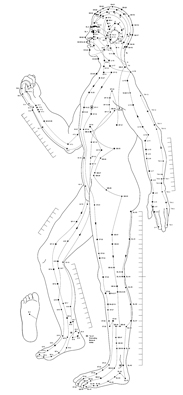
 Acupuncture has rapidly become an accepted treatment alternative in America.
People in the U.S. started to hear more about acupuncture after Mr. James Reston, a New York Times reporter, reported his own experience with acupuncture and how he benefited from acupuncture treatment for his severe pain after acute appendititis, while he was in China with President Nixon in 1972. After that M.D.s from western countries rushed to other side of the world to find out whether a tiny needle curing disease is a fairy tale or a real thing. To their surprise, they witnessed that the needle treatment, one of the ancient arts, not only cures many chronic diseases, but also its analgistic power demonstrated in open heart surgeries is completely beyond their imagination.
Seeing is believing. Many of them attended training courses in China and came back to the west to practice acupuncture. Another wave of interest in acupuncture came after the National Institute of Health Consensus in Acupuncture in 1997, which concluded that acupuncture is effective for certain conditions and calls upon more attention from mainstream medical field and public. Since then, NIH formed a new center for Complementary and Alternative Medicine and the fund used to support acupuncture research is more than tripled in past 5 years.
Now, in seeking an alternative way to cure disease, to avoid side effect of conventional medicine, to obtain a better life or to maintain an optimal health, people start to choose acupuncture. As NIH consensus indicated: “One of the advantage of acupuncture is that the incidence of adverse effects is substantially lower than that of many drugs or other accepted medical procedures used for the same condition? Recent reports indicated acupuncture and Chinese medicine is becoming more and more popular in this country.
Traditional Chinese Medicine includes in many specialties, similar to conventional medicine, such as internal medicine, pediatric, Gynecology, etc., using Chinese herbology, Acupuncture and Moxibustion, Tuina (a kind of bodywork included in therapeutic massage, acupressure and bone-setting, chiropractic manipulation), Cupping, Guasha, Tai Chi, and Qigong. However, in current stage, in Unites States and most of western countries, we may see only one kind of practitioner—acupuncturist. Some of acupuncturists also practice the individualized Chinese herbology and Tuina. If want to see who is an experienced practitioner, you could find his/her background first, especially ask the potential practitioner if he/she has a NCCAOM certificate in Chinese Herbology and/or Asian Bodywork. The practitioner’s clinical experience and academic study in your illness/disorder field are also important.
The main differences from the conventional medicine are: (1) Chinese medicine cures the illness/disorder through adjusting patient’s reaction to the specific pathogen / cause of illness, instead of killing the pathogen or treating the original cause; adjusting the patient’s constitution. This is a Taolist medicine—using “four oz force to overcome one hundred pounds? (2) Most of therapies in Chinese medicine are natural remedies and such therapies are very gentle and have less adverse effect. (3) Chinese medicine uses the holistic method and focus on patient’s life quality and function.